Quick answer
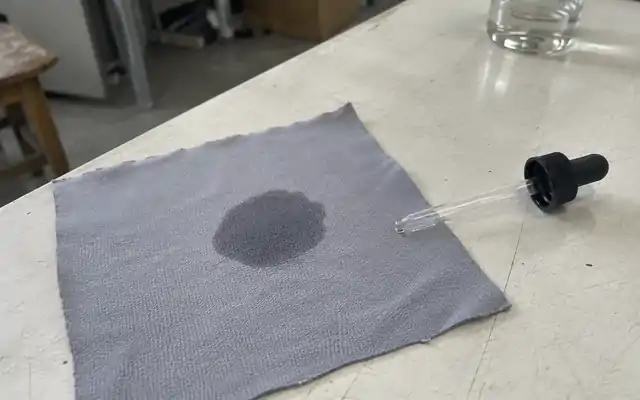
“Breathable” is not one universal result. Air permeability, moisture-vapor transfer, liquid transport and garment ventilation answer different questions. Start with the activity and climate, then define which property needs measurement and approve the garment construction.
The question behind this guide
How can a buyer confirm that a sports shirt is breathable?
Founder and sourcing discussions repeatedly return to social recommendations that call a fabric breathable without naming a method or garment condition. These posts are used to identify buyer uncertainty, not to establish a technical rule or market statistic.
Read the community discussionThis guide separates community question signals from standards, government guidance and order-specific factory decisions. Rankings are conditional decision aids, not universal product scores or claims that SenLin holds a named certification.
Key takeaways
- Define what breathable means for the use case.
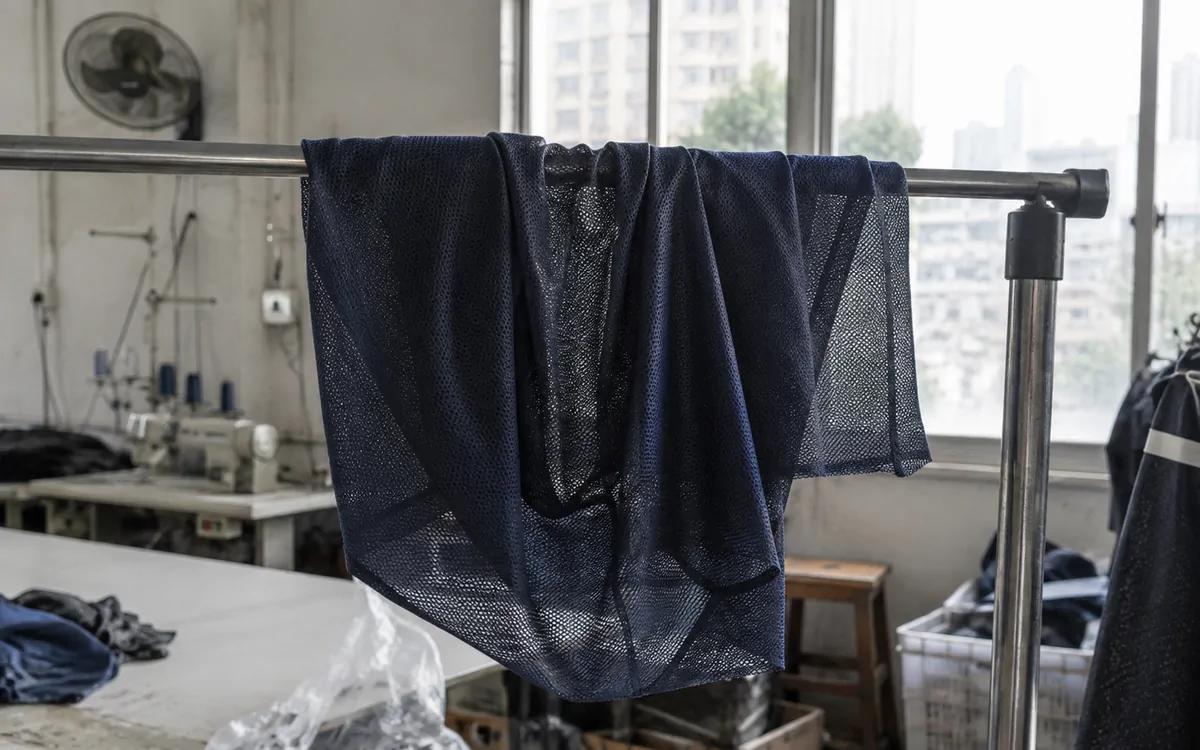
- Mesh zones can help only when placed and constructed appropriately.
- Opacity and snagging may trade off with openness.
- Request a method and acceptance level.
Four layers of breathability decisions
The sequence starts with the wearer because a laboratory number is useful only when it addresses the actual use.
Read the table as a shortlist for discussion. The final decision should be recorded against the intended wearer, garment construction, destination market, approved sample and commercial quantity.
| Rank | Layer | Buyer question |
|---|---|---|
| 1 | Wearer and climate | Where and how hard will the garment be used? |
| 2 | Garment ventilation | Are openings and panels positioned effectively? |
| 3 | Fabric transport | Which air or vapor property is measured? |
| 4 | Marketing wording | Does the claim match the evidence? |
What buyers often misunderstand about breathability
An open mesh can pass air yet create transparency or snag risk. A dense fabric can manage liquid without high airflow. Comfort is a system outcome.
A single headline value cannot describe the whole garment. Composition, knit or weave, finishing, pattern geometry, seams, decoration and care conditions interact. Ask which variable changed, what stayed constant and which sample or report supports the answer.
What to put in the development brief
Write requirements as testable decisions rather than adjectives such as premium, breathable or durable. If the target is unknown, label it as an open development question and agree how the sample will be compared.
For a custom sportswear factory enquiry, connect breathability to the style code, colour, size range, logo route and order quantity. This keeps the answer usable when the project moves from quotation to sampling and bulk.
- Activity, climate and layer position.
- Fabric and mesh zone map.
- Opacity and modesty requirement.
- Air or vapor method and target.
- Wash and finish durability.
Sample and evidence plan
Compare the body fabric and ventilation panels using the agreed property. Wear-test the sample for fit, chafing and coverage; record subjective feedback separately from laboratory data.
Keep the physical sample identifier, specification revision, material reference, artwork file and approval comments together. A report for another material or a successful prototype does not automatically prove that later bulk goods are identical.
- Confirm the question and acceptance criteria before testing.
- Use the proposed bulk material and construction where practical.
- Record method, conditions, result, date and sample identity.
- Resolve failures or substitutions before bulk release.
Factory confirmation checklist
SenLin’s published order baselines remain standard styles at 100+ pieces and custom developments at 300–500+ pieces; the applicable allocation, material route and decoration minimum must still be confirmed in the quotation. Published baselines are not an automatic acceptance of every specification.
| Checkpoint | Question to ask | Record to retain |
|---|---|---|
| Definition | Does breathable mean air, vapor or moisture transport? | Claim definition |
| Construction | Where are panels and seams located? | Approved garment |
| Trade-offs | What opacity and snag limit applies? | Inspection standard |
Decision and risk note
Choose the simplest construction that delivers the required ventilation without undermining coverage, durability or decoration.
Regulations and buyer requirements vary by product and destination. Use qualified compliance advice where needed, and do not print a performance, fiber, sustainability or care claim until the responsible party has a reasonable basis for it.
Continue your buyer research
Connect this decision to the relevant product, factory process and frequently asked questions before requesting a quotation.
Frequently asked questions
Does lower GSM mean more breathable?
Not necessarily; construction and finish can matter more than mass alone.
Is mesh always better?
No. Placement, openness, durability and opacity determine suitability.
Can breathability be felt by hand?
Handfeel can guide selection but cannot replace an agreed measurable property.
Sources and evidence notes
Community sources document recurring buyer questions and experience; they are not treated as universal technical standards. Official guidance is identified separately.
- Community discussionReddit: activewear factory, fabric and lead-time questions
- Community discussionReddit: small-brand manufacturing workflow
- Standards publisher: public scopeASTM D3776: mass per unit area of fabric
- Official US ruleFTC: Care Labeling Rule