Inside our own factory

The people. The process. Your next collection.

An owned-factory apparel supplier with roots in foreign trade since 2018. See the workshop behind our hoodies, performance apparel and teamwear, then connect your brief to a written production route.

Business roots
Since 2018
Standard-style MOQ
100+ pieces
Standard sample
3–4 days
Standard production
15 working days

Logo customization and mixed sizes are supported. Exact style, colour, schedule and destination shipping are confirmed in the quotation.

Explore manufacturing routes
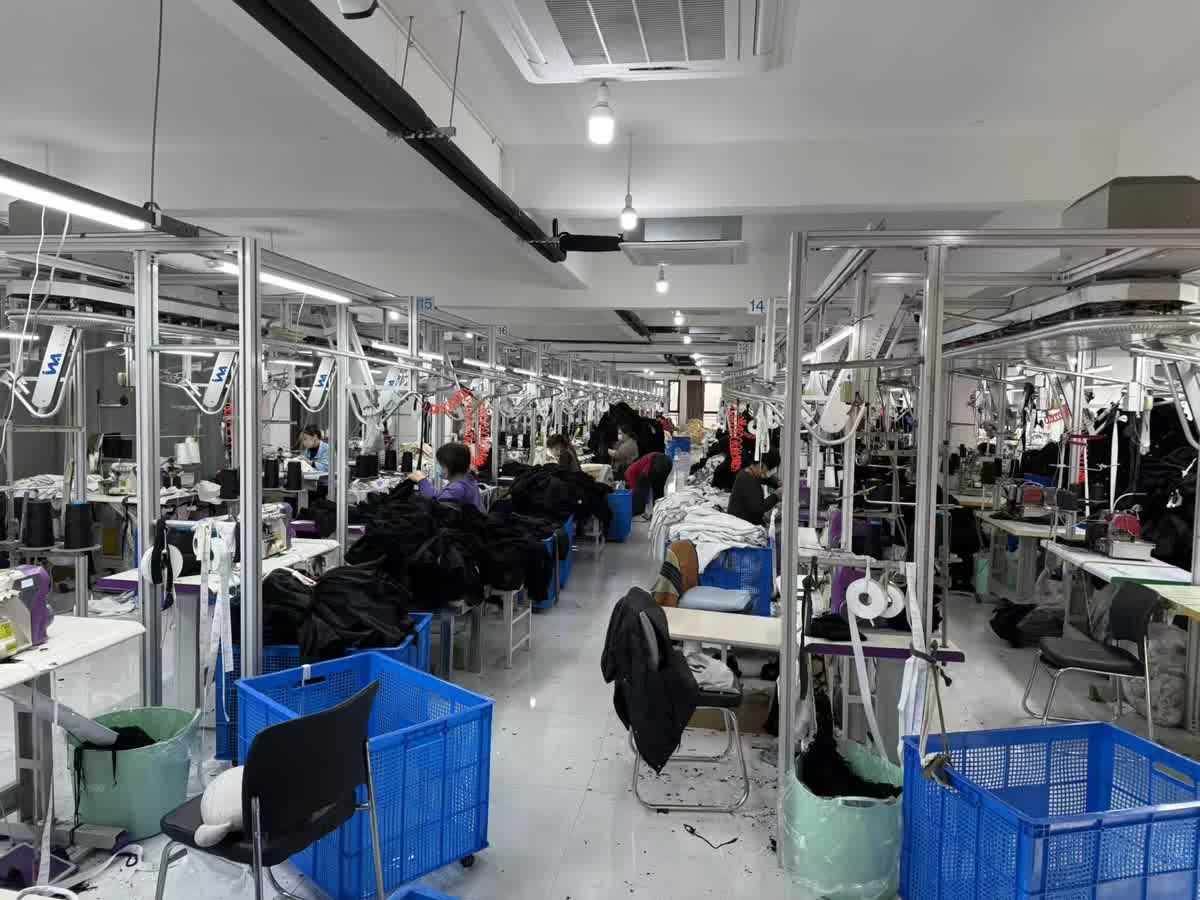
Factory operators working along sewing stations with dark garments and blue bins
Our factory · original photographProduction team · sewing stations and work in progress
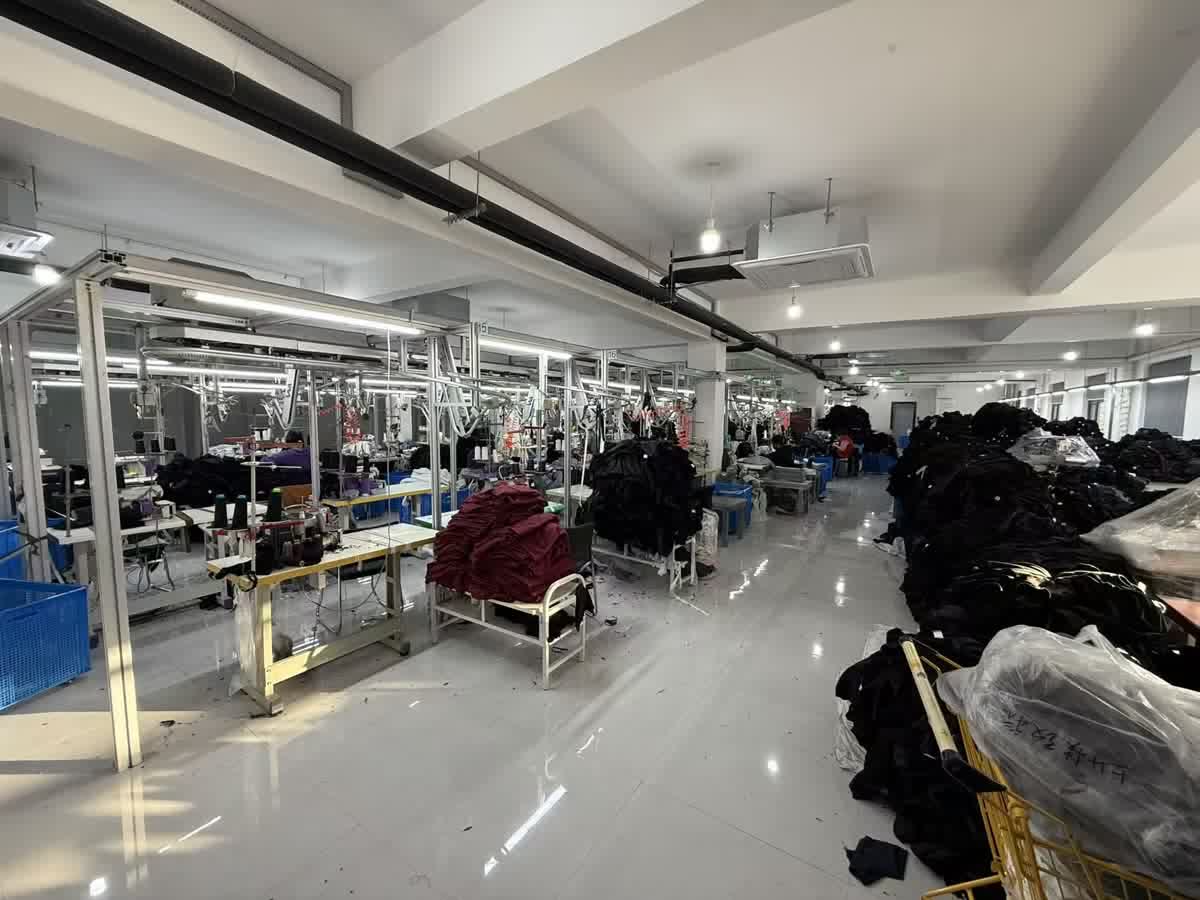
Wide view along the factory production aisle with sewing stations and garment bundles
Our factory · original photographWorkshop overview · equipment layout and garment flow

From a photograph to a project

A closer look. A better brief.

This wider workshop view shows the equipment layout and garments in progress. It helps you prepare practical questions about handling, work allocation and the production sequence.

A photograph is the start of due diligence, not a substitute for confirming the legal entity, relevant product experience and acceptance criteria.

Build your approval checklist

A closer look at making

From material choices
to the final fold.

Professional, efficient and warm in service: our factory principles become useful when they connect to the details of your garment. These process notes show what to discuss and approve along the way.

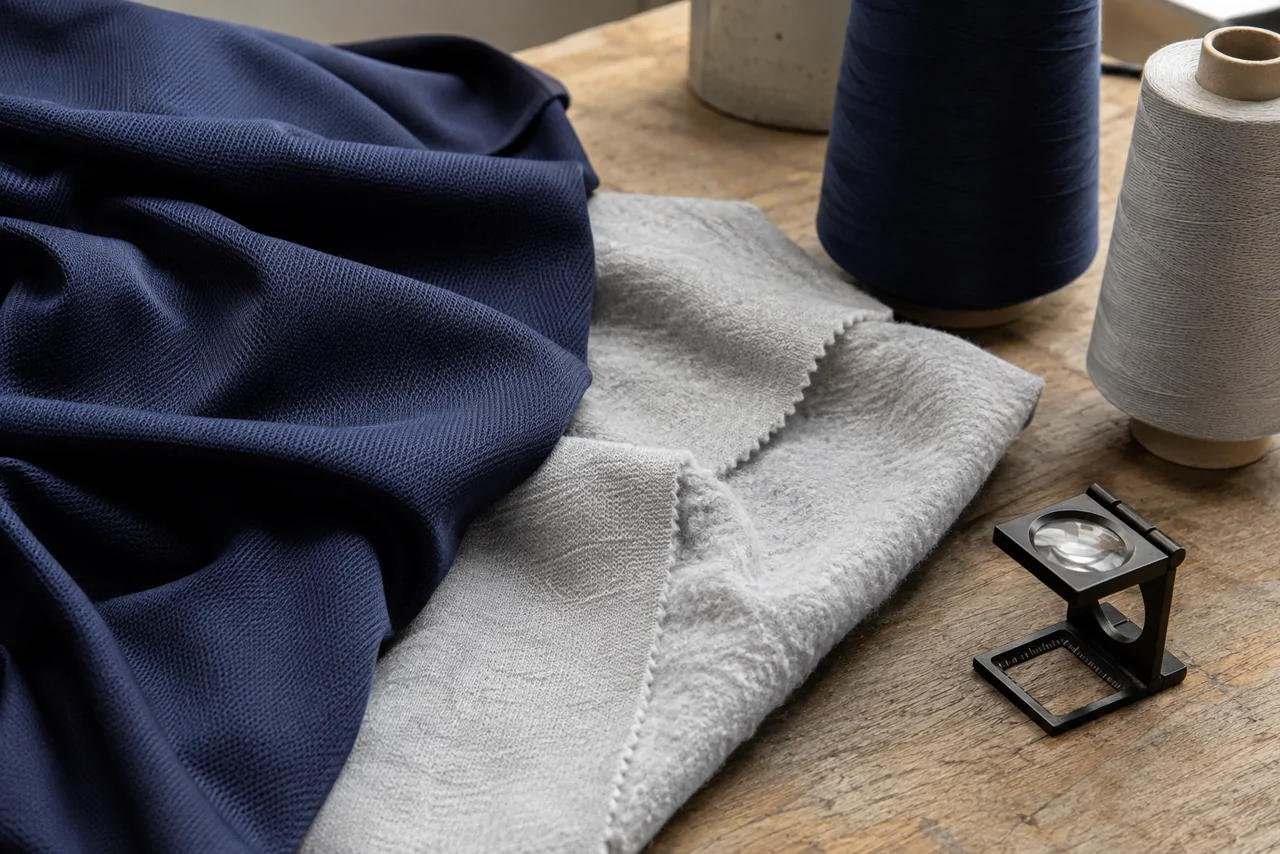
Navy jersey, grey fleece, thread cones and a textile loupe on a workbench — AI-assisted process illustration
Fabric and thread comparison

01 / MATERIAL PREPARATION

The garment starts before the first seam.

A fabric choice affects more than appearance. It changes the way a garment falls, feels and behaves during sewing. A performance polo and a heavyweight hoodie need different conversations, even when they carry the same brand.

For fleece, review the outer face, inside finish and matching rib together. For performance styles, discuss stretch, opacity and the intended wearing conditions. Compare a physical reference with the proposed material rather than deciding from a screen colour alone. Any required performance claim needs a defined test and relevant evidence.

  • Identify composition, weight and finishing requirements.
  • Agree the body fabric, rib, thread and trim colour references.
  • Clarify material substitutions before the sample is approved.
Explore fabric weight and structure
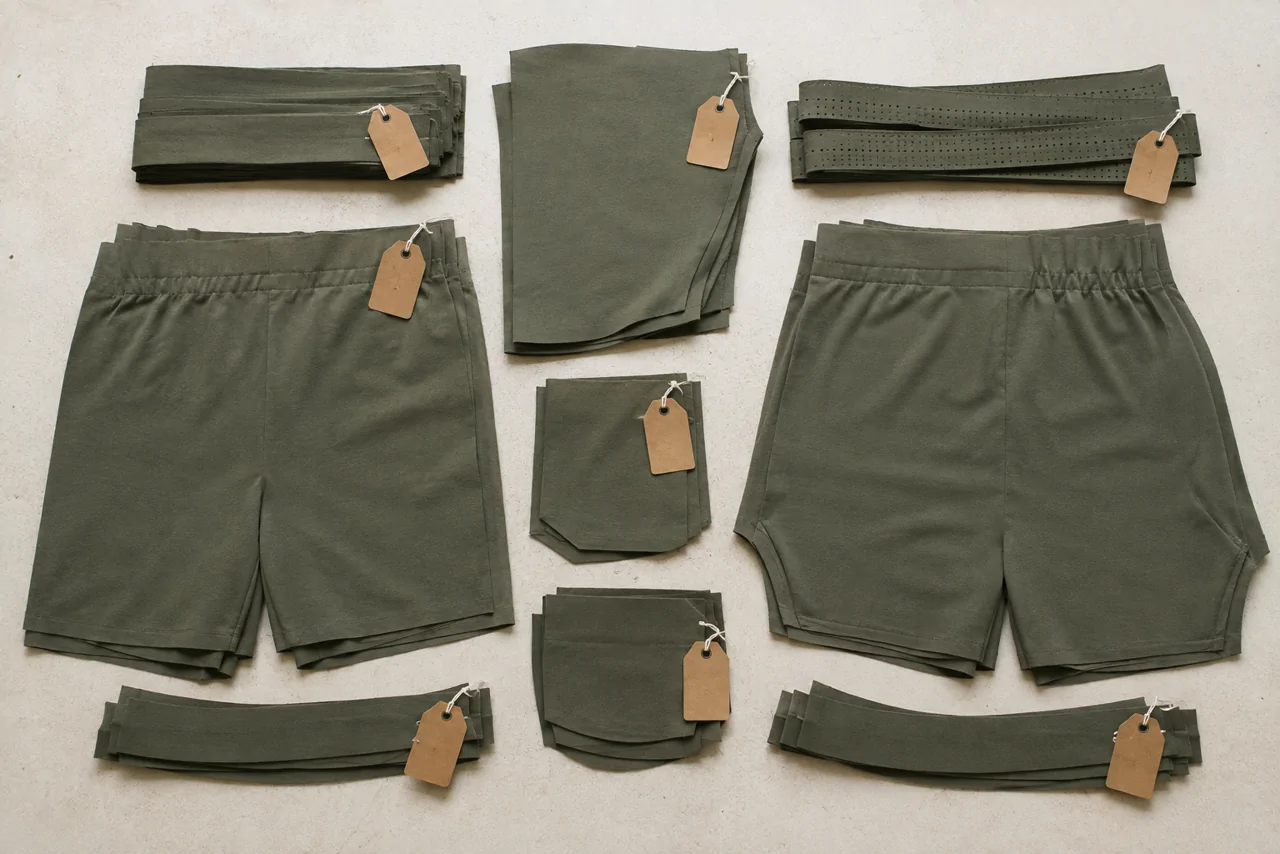
Olive shorts construction pieces and separate cut fabric bundles arranged on a worktable — AI-assisted process illustration
Cut parts and construction references

02 / CUTTING & CONSTRUCTION

Small pieces. One consistent product.

The finished garment depends on how its separate parts come together. Cut panels, collars, pockets and cuffs must relate to the same pattern version and size specification. An attractive sample is only a useful reference when those decisions are clear.

Discuss how size, colour and material lots will be kept identifiable through the proposed production route. Pay particular attention to paired sleeves, pocket placement and the relationship between body fabric and stretch trims. For matching sets, confirm the top and bottom size pairing as well as whether the order quantity counts garments or complete sets.

  • Keep the approved pattern and measurement version identifiable.
  • Review seam construction at stress points and visible joins.
  • Resolve grading, panel alignment and set pairing before bulk.
Prepare the construction brief
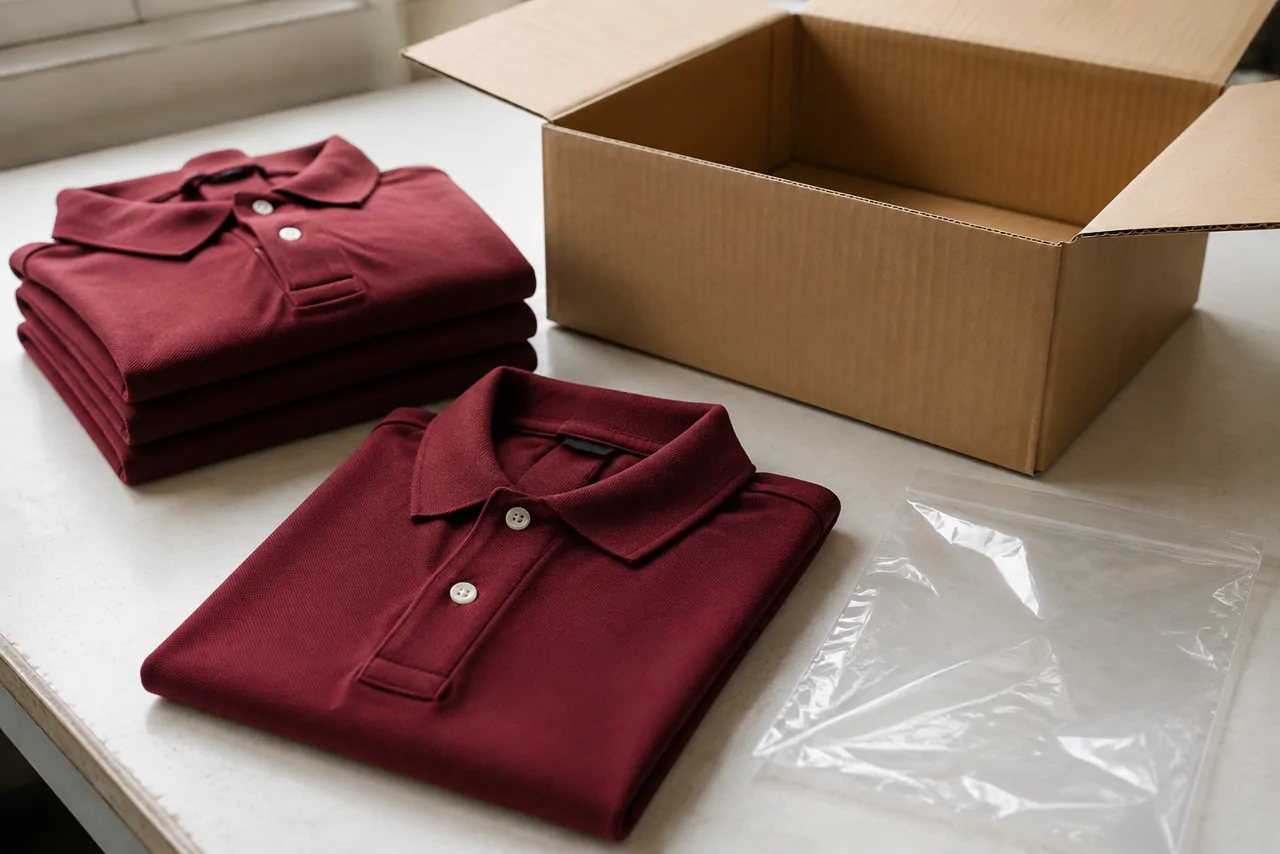
Folded burgundy polos, a protective bag and an open plain carton on a packing table — AI-assisted process illustration
Garment packing preparation

03 / FINISHING & HANDOVER

The last details travel with your brand.

The customer receives more than the garment. Folding, presentation, size identification and the packing list all influence the handover. Treat them as part of the order brief, not as decisions left until the cartons are ready.

Specify the label content and placement, packing materials, quantities per carton and any required size or style grouping. For team orders, an agreed allocation can make distribution easier at the destination. Sea freight, air freight and express courier are supported; the appropriate route depends on the shipment, destination and timing agreed for the order.

  • Confirm garment labels, individual packing and carton marks.
  • Reconcile the style, colour and size allocation with the packing list.
  • Separate production completion from shipping transit and arrival.
Plan shipping and handover

Quality with a reference

Define it. Check it.
Keep the standard clear.

Strict quality control is one of our core commitments. For your project, turn that principle into a practical inspection brief: what matters, how it is assessed and which records you expect to receive.

Four areas to include in your order-specific quality plan
CheckpointWhat to reviewReference to agree
Material & shadeCompare the proposed fabric and trims with the approved physical references. Review visible shade differences under consistent lighting.Swatches, composition and weight requirements; any agreed test reports.
Measurements & fitUse the same measuring points and garment condition for sample review and bulk inspection. Check more than the headline chest or waist measurement.Versioned size chart, measuring method and agreed tolerances.
Construction & decorationReview seam appearance, loose threads, puckering, pocket position and logo placement against the approved sample.Construction notes, artwork dimensions and an agreed reference sample.
Packing & allocationCheck label details and the style, colour and size breakdown before dispatch. Confirm how any discrepancy should be handled.Packing instructions, allocation sheet and the final packing list.

Agree inspection scope and acceptance criteria before production. The checks above are a planning framework, not a claim of certification or a test result.

Discuss inspection and acceptance

Efficient by preparation

Good communication
keeps the work moving.

Speed and clarity belong together. From our beginnings in foreign trade in 2018 to an owned-factory supplier business, professional coordination and approachable service remain central to how we want to work with customers.

01

One clear reference

Keep the sample, measurement chart and artwork tied to the same approval version. If a detail changes, record what changed and whether it affects cost, materials or timing.

02

Decisions before deadlines

A production window is easier to plan when materials, colour allocation and sample comments are settled. Confirm the schedule start point and the approvals that must happen first.

03

Specific, useful updates

Agree the project contact, update points and supporting views you need. A useful progress update identifies the stage reached, any open decision and the next action required.

Packing, freight & handover

Pack the product.
Plan the route.

All products support custom individual packaging and custom cartons. Shipping is planned as a separate, written part of the order so production completion, freight charges and arrival expectations stay clear.

Chinese logistics staff loading plain garment cartons into a delivery truck at a warehouse — AI-assisted editorial illustration
01

Factory pickup & road dispatch

After the packing list and carton marks are approved, domestic pickup and road transfer can be coordinated for the selected sea, air or express route. Collection time, handover point and receiving party are confirmed for the shipment.

Chinese air-cargo staff checking plain apparel cartons near a cargo aircraft — AI-assisted editorial illustration
02

Air freight

Air freight is available when the order needs a faster bulk route. The quotation should identify destination, chargeable weight, carton details, handling responsibilities and the expected transit window.

Chinese port workers coordinating apparel cartons and a shipping container at a sea terminal — AI-assisted editorial illustration
03

Sea freight

Sea freight can suit larger, less time-sensitive orders. Confirm the named port or place, shipping term, carton volume, export handover, customs responsibilities and destination charges before booking.

Chinese factory coordinator handing a plain apparel sample carton to an express courier — AI-assisted editorial illustration
04

Express courier

Express courier is supported for samples and suitable shipments. The courier route, chargeable weight, delivery address, contact details, customs documents and quoted freight are checked before dispatch.

Custom packaging & cartons

Your presentation travels with the order.

All products support custom individual packaging and custom cartons. Confirm the bag or box material, dimensions, artwork, carton marks, pack ratio, quantity and any destination requirements in the quotation.

These options are available across the product range. Packaging specifications, cost and any destination compliance requirements are confirmed before production.

Freight charges

Quoted for the actual shipment.

Freight is quoted for each shipment from its destination, carton count, actual or volumetric weight, shipping mode and agreed trade term. Production time excludes transit, customs clearance, duties and destination taxes unless the quotation expressly includes them.

Sea freight, air freight and express courier are supported. Transit time, freight charges, packing and any duties or taxes are confirmed for your destination.

Returns & exchanges

Use the approved specification as the reference.

Custom and B2B goods are not automatically returnable for preference or unsold stock. Inspect the shipment promptly, keep the packaging and count records, and report any issue against the approved specification with photographs. Rework, replacement, credit, return freight and reporting deadlines must be agreed in the written order terms.

This is order-planning guidance, not a blanket consumer returns policy. Your quotation and written order terms control the agreed remedy.

The four logistics images are AI-assisted editorial illustrations featuring Chinese logistics teams. They explain shipping routes and handover planning; they are not photographs of our employees, a named carrier or a customer shipment.

Confirm packing and shipping terms

A product-focused factory visit

Follow your garment through the workshop.

Use the photographs to plan the conversation. Ask to review the operations relevant to your own product, with a sample and specification at hand.

  1. 01

    Material identification

    Ask how fabric lots, colours and cut pieces will be identified for your order. Bring the approved swatch and style codes.

  2. 02

    Construction sequence

    Review the proposed sewing steps and the details that need extra attention, such as collars, pockets, cuffs or matched panels.

  3. 03

    Sample-to-bulk checks

    Agree what the operator and inspection team should compare with the approval sample, and how changes will be recorded.

  4. 04

    Order handover

    Confirm who approves the packing list, checks the size allocation and coordinates shipment. Request the order-specific responsibility map.

Ask about a factory walkthrough

Connect the workshop to your order.

02 / Set the standard

Approve the product, not a promise

Confirm the material, fit, workmanship and decoration on a physical sample. Agree which records and checks will accompany your order.

Inspection & remedy checklist

03 / Confirm the scope

Know who does each operation

Ask for the process map relevant to your style, including any partner decoration or testing, and confirm the contact responsible for approvals.

Prepare a factory enquiry
Production scope & visit information

The owner has confirmed these photographs show our own factory. The compact company identity block in the homepage footer provides the public details used for independent registration checks; order-specific operations and visit arrangements still require confirmation.

Order-specific in-house scope
Awaiting factory confirmation
Partner / subcontracted operations
Awaiting factory confirmation
Factory visit arrangements
Awaiting factory confirmation

Capacity figures, certifications, inspection reports and customer cases are not claimed without supporting records.

Before you enquire

Practical answers for buyers.

What does strict quality control mean for my order?

It starts with agreeing what will be checked: materials, measurements, construction, decoration and packing. Keep the approved sample and written criteria together. Inspection method, sampling level, tolerances, records and the response to defects should be agreed for your order; no certification or universal inspection level is implied.

How should I prepare a mixed-size or matching-set order?

Provide a quantity matrix by style, colour and size. For sets, specify the top and bottom pairing and whether quantities refer to individual garments or complete sets. Confirm any size-specific artwork changes and packing allocation before approval.

Can you produce my logo on an existing style?

Logo customization and mixed sizes are supported for standard-style orders from 100 pieces. Send the artwork, its dimensions and placement. The decoration method, available base style, material and final price belong in the quotation; fully custom orders have a separate 300–500+ piece starting minimum.

What happens if a sample needs changes?

Send one consolidated list with marked photographs and measurements. Identify the sample version and distinguish required corrections from new design requests. Agree any additional sample cost and timing, then retain the final approved reference for production.

Are the process close-ups actual factory photographs?

The two workshop views on this page are owner-supplied photographs of our own factory. The three material, cut-panel and packing close-ups are generated process illustrations. They explain production considerations and are not records of our premises, employees, equipment or a customer order.

Can every product use custom packaging and cartons?

Yes. Custom individual packaging and custom cartons are supported across the product range. Confirm material, dimensions, artwork, carton marks, pack ratio, destination requirements and price in the quotation. The packaging plan should match the final style, colour and size allocation.

How are freight charges, returns and exchanges handled?

Freight is quoted for the actual shipment using destination, carton count, chargeable weight, shipping mode and trade term. Custom and B2B goods are not automatically returnable for preference or unsold stock. Inspect promptly and report any issue against the approved specification; deadlines, remedy and return freight must be agreed in the written order terms.

Are these photographs of your own factory?

Yes. These workshop, equipment and storage photographs were supplied by the factory owner, who confirmed that they show our own factory.

What can I see in the factory photographs?

The photographs show sewing workstations, garment handling, fabric-laying tables, a cutting machine, component equipment and textile storage. They document the working environment; they do not establish a capacity figure, certification or a test result.

Can I arrange a live factory walkthrough?

Ask for a walkthrough with your product category and the operations you want to review. Availability, the production address, the host and any filming restrictions need to be confirmed before a visit or call.

Does every process take place in-house?

The photographs show our workshop, but they are not a complete process map. Request written confirmation of cutting, sewing, decoration, finishing and testing responsibilities for your specific order, including any partner operations.

What should I verify before approving production?

Match the contracting company to the quotation, confirm the production location and scope, then review a physical sample and its specification. Ask separately for relevant inspection records and any claimed certification.