
Fibres, weight & claims
Performance & Fleece Fabric Technology
Translate fibre names, GSM and finish into an apparel specification that can be sampled, tested and repeated.
Reviewed September 5, 2026
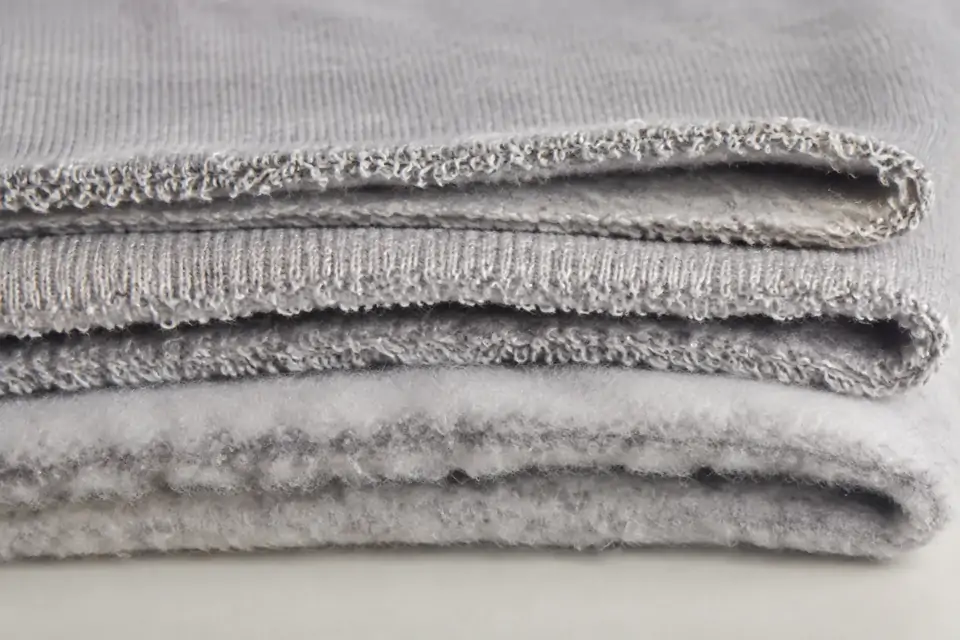
Composition and GSM describe the material direction, but they do not prove breathability, stretch, moisture management, warmth or durability by themselves. Confirm the physical swatch and agree any test method or numeric claim before production.
Confirmed fabric directions
The final fibre declaration, inside finish, colour and size availability remain order-specific. “Huamian cotton (华棉)” is an owner-supplied trade term and needs an exact fibre declaration before care labels are produced.
| Range | Fibre direction | Weight | Confirmed use |
|---|---|---|---|
| Core performance apparel | 80–90% polyester or polyamide (nylon) as principal fibre, with elastane by style | 180 g/m² inclusive to below 250 g/m² | Breathable, high-stretch, moisture-wicking sports direction |
| Performance polos | 70–85% nylon/polyamide or polyester direction | 250–350 g/m² | Lightweight solid-colour ready stock for business, smart teamwear and movement |
| Fleece apparel | 96%+ pure cotton, Huamian cotton (华棉) or polyester route | 200–400 g/m² | Relaxed solid-colour ready stock for summer, spring or all-season options |
What the common terms mean
Two fabrics with the same composition and GSM can perform differently because yarn, knit structure, finishing and dyeing also matter.
- Polyester: a durable synthetic fibre used across technical knits and fleece routes.
- Polyamide or nylon: a synthetic fibre often selected for softness, strength or abrasion-related design needs.
- Elastane: adds stretch; the percentage alone does not define recovery or garment movement.
- GSM: fabric mass per square metre, not a complete measure of thickness, warmth or quality.
- Brushing and surface finish: change handfeel, appearance and pilling risk and must be approved physically.
Build a defensible performance claim
For buyer-facing claims such as quick drying, moisture wicking, colourfastness or pilling resistance, define the relevant end use and evidence before printing labels or marketing copy. Keep the test method, specimen details, result and acceptance threshold together.
SenLin does not present a fibre percentage as independent proof of a performance result. Ask for the evidence required by your target market and claim wording.
Questions buyers ask
Answers to use before quotation.
Does a higher GSM always mean better quality?
No. GSM is fabric mass per square metre. Structure, yarn, finish, recovery, pilling, shrinkage and intended use also affect suitability.
Is nylon different from polyamide?
Nylon is a family within polyamide fibres. Final fibre wording should follow the approved material specification and destination-market labelling rules.
Can you guarantee moisture wicking?
Moisture wicking is a confirmed product direction, but any numeric or comparative claim needs an agreed test method and acceptance threshold.
Review & evidence
What this guide is based on.
Owner-confirmed fibre, GSM and size directions are stated as product parameters; numeric performance claims still require an agreed test method.
Last reviewed: September 5, 2026
Related products
Continue researching