
Quick answer
Choose decoration by the actual fabric, artwork, quantity and desired feel. Consider screen printing for a repeated design, DTG for suitable direct-to-garment work and DTF for a compatible transfer route. Compare decorated samples and complete quotes; no method name guarantees durability or a premium result.
The question behind this guide
Which printing method feels good and survives washing?
A print-shop discussion compares DTG, DTF and screen printing, with replies debating cost, feel and durability. Those experiences raise useful questions, but they do not establish one universal best method.
Read the community discussionRankings describe starting options for a particular order profile. They are editorial recommendations, not comparative laboratory scores, vendor endorsements or fixed break-even quantities.
Key takeaways
- There is no single best print process for every order.
- Rank methods against artwork, fabric, quantity and wash expectation.
- Approve color, handfeel, placement and wash behavior on the actual fabric.
- A print method is only as repeatable as its ink, pretreatment, curing and operator control.
What happens in each process?
DTG places the print directly on the garment; the supported material and preparation depend on the equipment and ink system. Epson’s maker guidance points users toward cotton and cotton/polyester blends for its DTG workflow. That is product guidance, not a ban on all other DTG systems.
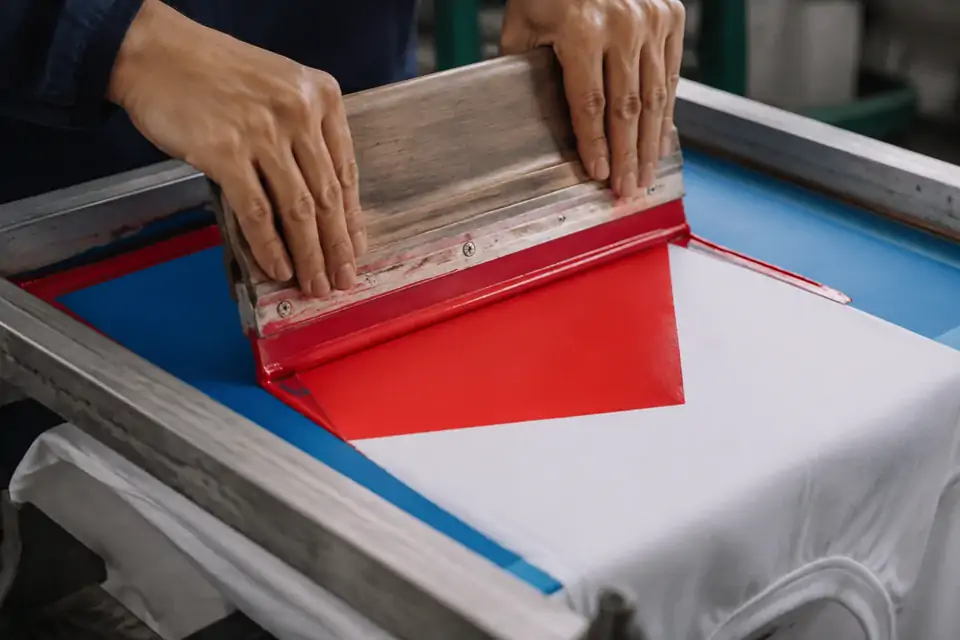
DTF produces a transfer that is applied to the garment. Roland describes a hot-melt adhesive powder used with its transfer film and names several compatible fiber categories. Compatibility still needs confirmation for the particular fabric, finish and transfer system. Screen printing applies ink through a prepared screen; assess its preparation and production costs for your artwork.
A conditional shortlist, not one overall winner
Read the shortlist from left to right. A preferred use case creates a candidate, not an automatic winner. A tiny logo, full-front solid graphic and photographic image are different jobs even when they are printed on the same T-shirt.
| Your priority | Start by comparing | What could change the decision |
|---|---|---|
| A repeated, limited-colour graphic | Screen-print quotes | Setup cost, ink system and actual run size |
| Detailed artwork on suitable cotton | DTG samples | Pretreatment, surface and curing requirements |
| Mixed garment materials or variable artwork | DTF samples | Adhesion, heat sensitivity, feel and press conditions |
| A large print worn during movement | Several methods on the same fabric | Coverage, stretch, comfort and the accepted wash result |
How to compare quotations fairly
Send exactly the same artwork dimensions, placement, garment colour, fabric and quantity to each provider. Ask for preparation charges separately from the production price. Clarify whether the quote includes white underbase, colour matching, sample approval, packing and any repeat-run setup.
There is no reliable universal quantity at which screen printing becomes cheaper than another method. The crossover depends on the artwork and each provider’s pricing. If a supplier gives a price break, compare total order costs on both sides of that break while keeping the specification unchanged.
Build one decorated-sample review
AATCC’s public laundering overview distinguishes tests for dimensions, appearance and seam effects. Simply saying a garment was washed does not identify the method or acceptance limit. Record what you actually checked, and request product-specific evidence for any durability claim.
- Appearance: compare colour, edge definition and placement with the approved artwork.
- Feel: check the printed area against the unprinted fabric, especially for large solid graphics.
- Movement: review the garment in its intended use and record any cracking or lifting.
- Care: agree the wash and drying conditions, cycles and acceptance criteria.
- Repeatability: retain the accepted sample and note the garment, ink or transfer route used.
What if the first sample fails?
Describe the failure before changing the printing method. Identify whether the issue is placement, colour, feel, adhesion or the garment itself. Ask the provider to explain the proposed change and make another sample on the intended production fabric.
Do not treat a successful transfer on an unrelated cotton blank as approval for a stretch performance top. Keep the final decorated sample connected to the final fabric and care instructions. This is the decision record that should accompany the bulk order.
Put this guide to work
Compare decoration on the intended garment
Do not choose a printing route from a method name alone. Send the same artwork, placement dimensions, garment colour and fabric specification for each option you want quoted. Ask for a decorated sample or strike-off on the proposed material, then review appearance, feel and the care checks agreed for your project. Compare setup charges and unit costs at the actual order quantity. The lowest quoted print cost may not include the same preparation or approval work.
Your decision checklist
- Compare identical artwork, dimensions and fabric.
- Record setup fees separately from garment and decoration prices.
- Approve the decorated sample and care requirements in writing.
These are planning examples, not customer case studies or quotations.
Frequently asked questions
Which method has the softest handfeel?
A well-engineered water-based screen print or suitable DTG can feel softer than a large solid DTF transfer, but artwork coverage and ink system change the result.
Can DTF be used for a clothing brand?
Yes, if the surface feel, edge, wash result and production consistency meet the brand standard. The method itself does not determine brand quality.
Should I wash-test decoration?
Yes. Define the care method and evaluate cracking, peeling, color change, migration and handfeel after the agreed wash cycles.
Sources and evidence notes
Community sources document recurring buyer questions and experience; they are not treated as universal technical standards. Official guidance is identified separately.
- Community discussionReddit: DTG, DTF and screen-printing experiences
- Equipment manufacturer guidanceEpson: DTG and DTFilm material considerations
- Equipment manufacturer guidanceRoland DGA: DTF adhesive powder and compatible materials
- Standards publisher: public overviewAATCC: laundering methods for fabrics and garments