Quick answer
There is no universal best activewear fabric. Polyester blends are a practical all-round starting point for drying and value; nylon or polyamide blends often win when a smoother handfeel and abrasion resistance matter; elastane controls stretch and recovery rather than serving as the main fiber. Rank fabrics against the garment and test the chosen construction.
The question behind this guide
Which fabric is best for men’s performance apparel?
Founder and sourcing discussions repeatedly return to fabric names, GSM, stretch, wicking and whether stock materials can support a first order. These posts are used to identify buyer uncertainty, not to establish a technical rule or market statistic.
Read the community discussionThis guide separates community question signals from standards, government guidance and order-specific factory decisions. Rankings are conditional decision aids, not universal product scores or claims that SenLin holds a named certification.
Key takeaways
- Rank fabrics by end use, not fiber reputation.
- Specify fiber percentage, structure, finished GSM and stretch direction.
- Approve opacity, recovery, handfeel and care behavior on the actual garment.
- Treat moisture, odor and UPF statements as claims that need evidence.
Conditional ranking by buyer objective
This ranking prioritizes common men’s gym-wear briefs rather than declaring one fiber superior. A fabric may rank first for a training tee and poorly for a heavyweight warm-up layer.
Read the table as a shortlist for discussion. The final decision should be recorded against the intended wearer, garment construction, destination market, approved sample and commercial quantity.
| Rank | Buyer objective | Starting direction | Confirm before bulk |
|---|---|---|---|
| 1 | Versatile training tops | Polyester-rich technical knit | Wicking, snagging, odor retention and handfeel |
| 2 | Smooth premium compression | Nylon/polyamide with elastane | Opacity, recovery and abrasion |
| 3 | High-airflow panels | Engineered mesh | Hole stability and seam compatibility |
| 4 | Lifestyle crossover | Cotton blend | Drying time, shrinkage and shape retention |
What buyers often misunderstand about performance fabric selection
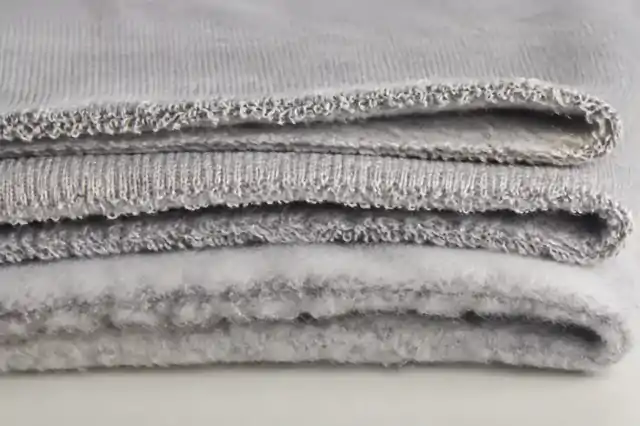
“Polyester,” “nylon” and “spandex” are fiber names, not complete specifications. The same blend can be knitted and finished in ways that produce different weight, surface, stretch and drying behavior.
A single headline value cannot describe the whole garment. Composition, knit or weave, finishing, pattern geometry, seams, decoration and care conditions interact. Ask which variable changed, what stayed constant and which sample or report supports the answer.
What to put in the development brief
Write requirements as testable decisions rather than adjectives such as premium, breathable or durable. If the target is unknown, label it as an open development question and agree how the sample will be compared.
For a custom sportswear factory enquiry, connect performance fabric selection to the style code, colour, size range, logo route and order quantity. This keeps the answer usable when the project moves from quotation to sampling and bulk.
- Product and activity: tee, polo, shorts, pants or set.
- Generic fiber names and target percentages.
- Finished fabric mass and tolerance.
- Stretch direction, opacity and recovery expectations.
- Surface, color and care requirements.
Sample and evidence plan
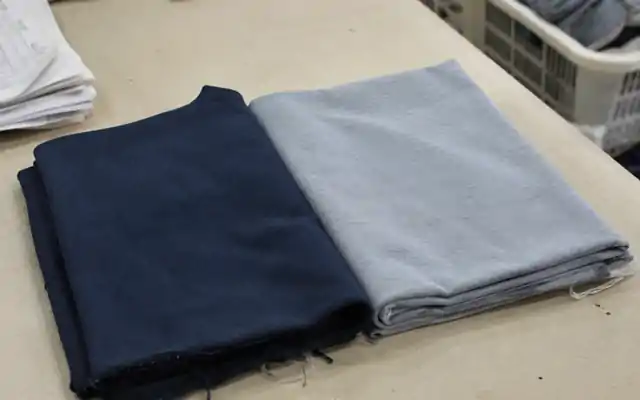
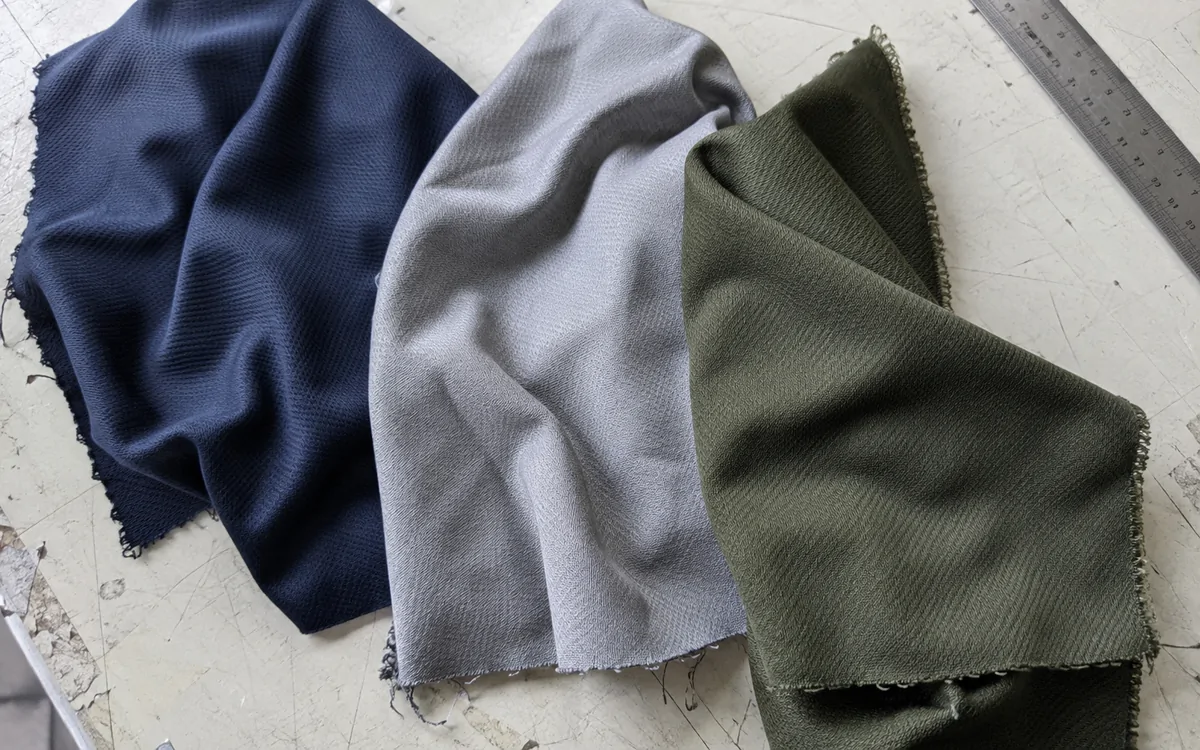
Compare swatches before selecting one garment sample. If performance matters, agree the relevant method and acceptance threshold instead of accepting a generic supplier claim.
Keep the physical sample identifier, specification revision, material reference, artwork file and approval comments together. A report for another material or a successful prototype does not automatically prove that later bulk goods are identical.
- Confirm the question and acceptance criteria before testing.
- Use the proposed bulk material and construction where practical.
- Record method, conditions, result, date and sample identity.
- Resolve failures or substitutions before bulk release.
Factory confirmation checklist
SenLin’s published order baselines remain standard styles at 100+ pieces and custom developments at 300–500+ pieces; the applicable allocation, material route and decoration minimum must still be confirmed in the quotation. Published baselines are not an automatic acceptance of every specification.
| Checkpoint | Question to ask | Record to retain |
|---|---|---|
| Identity | What exact generic fibers and percentages are proposed? | Swatch card and composition |
| Performance | Which properties are claimed and how are they checked? | Method and result |
| Bulk control | How will shade and lot changes be managed? | Approved lot or reference |
Decision and risk note
Choose the lowest-complexity material that meets the wearer’s real needs. Add a custom finish or mill program only when the benefit justifies the quantity, lead time and evidence burden.
Regulations and buyer requirements vary by product and destination. Use qualified compliance advice where needed, and do not print a performance, fiber, sustainability or care claim until the responsible party has a reasonable basis for it.
Continue your buyer research
Connect this decision to the relevant product, factory process and frequently asked questions before requesting a quotation.
Frequently asked questions
Is nylon the same as polyamide?
Nylon is a family within polyamide fibers; use the permitted generic fiber name for the destination market.
How much elastane is enough?
There is no universal percentage. Stretch also depends on construction; test the actual fabric and garment.
Can stock fabric be customized?
Stock colors and constructions can support faster starts, while custom dyeing or knitting usually adds minimums and approvals.
Sources and evidence notes
Community sources document recurring buyer questions and experience; they are not treated as universal technical standards. Official guidance is identified separately.
- Community discussionReddit: activewear factory, fabric and lead-time questions
- Community discussionReddit: small-brand manufacturing workflow
- Official US guidanceFTC: textile fiber, origin and business identity labeling
- Official EU guidanceEuropean Commission: textile fiber labeling FAQ
- Standards publisher: public scopeASTM D3776: mass per unit area of fabric