Quick answer
GSM is fabric mass in grams per square metre. A 500 GSM fabric has more mass per equal area than a 300 GSM fabric, but that does not by itself prove better quality, warmth or durability. Compare composition, knit structure, finish and the approved garment before choosing.
The question behind this guide
Is a 500 GSM hoodie really better than a 300 GSM hoodie?
In a fabric discussion, a buyer requested French terry but received a quotation using a different fleece description. That illustrates why a weight number cannot resolve uncertainty about the fabric construction.
Read the community discussionThe weight comparison is an editorial explanation, not a warmth rating or a laboratory result. We reference public method descriptions, not reproduce paid test procedures.
Key takeaways
- Compare GSM only within similar fiber and knit constructions.
- French terry and brushed fleece at the same GSM do not feel identical.
- Shrinkage, recovery, pilling and colorfastness need their own standards.
- Approve a physical fabric and garment sample—not a number alone.
GSM is mass, not a complete performance score
Two fabrics can share the same GSM and behave differently because of yarn size, loop structure, brushing, fiber blend and finishing. A dense 360 GSM loopback can feel firmer than a loftier brushed fleece with similar weight.
Specify these alongside GSM
- Fiber composition and yarn type
- Knit structure: brushed fleece or loopback French terry
- Finished, not greige, GSM tolerance
- Dimensional stability after the agreed wash method
- Pilling, colorfastness and spirality expectations
- Rib composition, weight and recovery
What does GSM measure, exactly?
GSM describes mass per unit area, not the total weight of a hoodie. ASTM D3776 addresses fabric mass per unit area. A full garment also contains a particular pattern area, hood layers, pockets, rib, seams and trims; changing its size or silhouette changes the finished garment weight.
As a simple illustration, 0.10 square metre of 300 GSM fabric has a nominal mass of 30 grams; the same area at 500 GSM has a nominal mass of 50 grams. This arithmetic explains the unit. It is not a sampling or conditioning procedure for a laboratory test.
300, 400 and 500 GSM: compare equal areas first
Use these weights as three candidates, not bronze, silver and gold quality grades. Ask for comparable swatches, then choose the direction that suits the intended wearer, climate and silhouette. If one option uses a different knit or fiber blend, record that difference rather than attributing the whole result to GSM.
| Fabric weight | Mass of 0.10 m² | What the number does not answer |
|---|---|---|
| 300 GSM | 30 g | How the fabric drapes, feels or behaves after washing |
| 400 GSM | 40 g | Whether the hood, body and rib are well balanced |
| 500 GSM | 50 g | Whether the wearer needs or wants the extra mass |
Why French terry and brushed fleece need separate descriptions
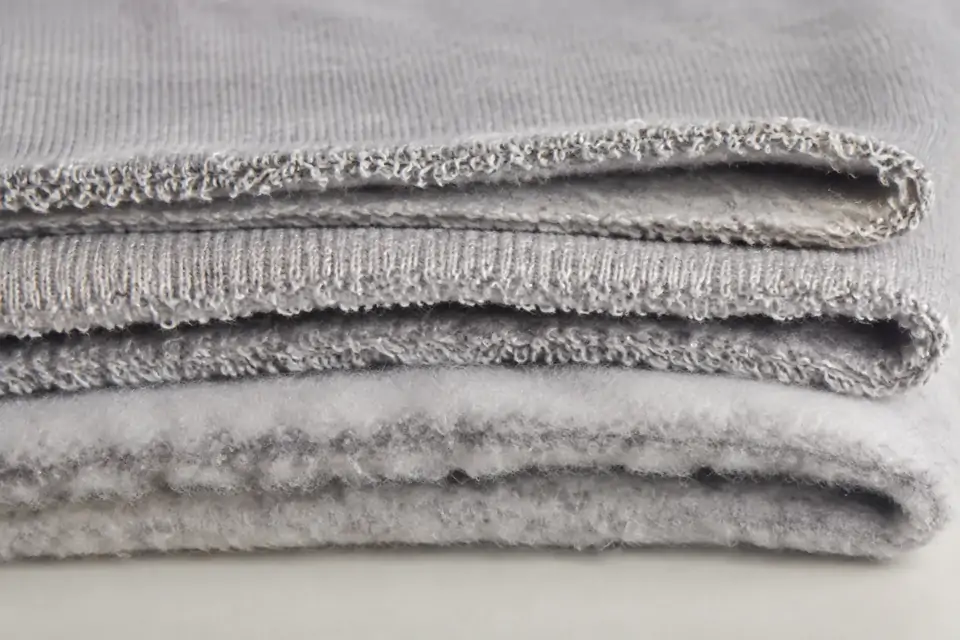
CottonWorks presents fleece and French terry as distinct material directions. For purchasing, record the inner surface and finishing as well as the weight. A looped interior and a brushed surface can create different tactile impressions; the category name alone does not specify the complete fabric.
Request a close-up of both sides and a physical swatch. Identify the body fabric separately from the rib, pocketing and any hood lining. On a matching hoodie-and-jogger set, approve the combination together: two materials described with the same colour name may still look different.
Ask for a wash result that can be interpreted
AATCC lists separate methods for dimensional change in fabrics and in garments: TM135 and TM150. A fabric result and a finished-garment result answer related but different questions. Ask which item was tested, which procedure was used and what the report actually measured.
For your approval plan, record the wash and drying conditions, number of cycles, measurement points and agreed limits. Compare the sample before and after using the same measurement method. Do not invent a universal shrinkage allowance or accept “wash tested” without knowing what passed.
A better hoodie approval sheet
A useful decision says why a fabric was selected. For example, a buyer may prefer the drape of one swatch and the inside feel of another; that is a development question to resolve with the sample, not a reason to choose the highest number automatically.
- Material identity: composition, structure, finish and the agreed finished-fabric weight.
- Garment balance: hood, body, cuffs and hem reviewed together.
- Fit: chest, body length, sleeve length and intended layering allowance.
- Appearance: surface, seams, shade and decoration before and after the agreed care check.
- Traceability: swatch reference, sample version, date and written approval.
Put this guide to work
Compare swatches before selecting a hoodie weight
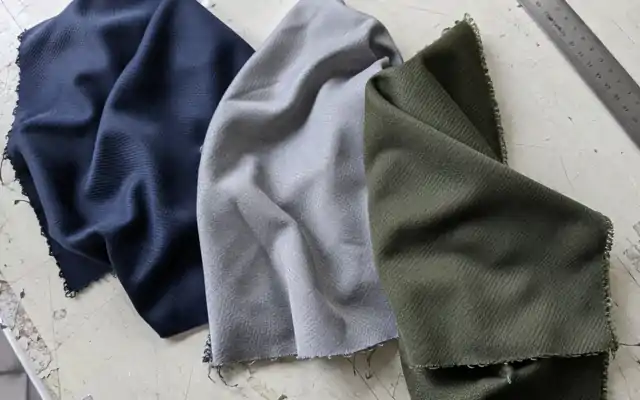
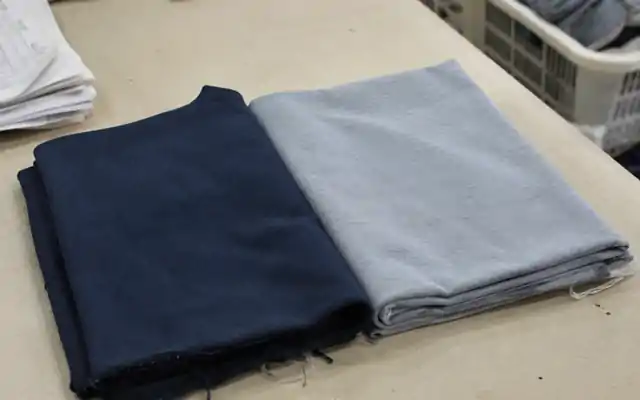
For a hoodie range, compare the proposed fabrics beside one another under the same light. Record composition, weight, brushed or loopback interior, stretch and handfeel. Then review an actual garment for drape, hood shape and rib balance. A heavier swatch is not automatically the better choice: the right option depends on the intended season, silhouette and wearer. Keep the approved swatch linked to the sample version so a later material change is visible.
Your decision checklist
- Record fabric structure as well as GSM.
- Review the complete garment, including rib and hood.
- Agree wash and dimensional checks for the selected material.
These are planning examples, not customer case studies or quotations.
Frequently asked questions
Is 500 GSM automatically better?
No. It is heavier. Whether it is better depends on climate, silhouette, cost and the desired wearer experience.
Should GSM be measured before or after finishing?
Agree that the quoted value refers to finished fabric and define a tolerance, because dyeing and finishing can change mass and dimensions.
Is French terry cooler than brushed fleece?
Often, loopback French terry feels less insulating than a brushed interior, but fiber, thickness and finishing still matter.
Sources and evidence notes
Community sources document recurring buyer questions and experience; they are not treated as universal technical standards. Official guidance is identified separately.
- Community discussionReddit: French terry versus fleece in a sample brief
- Standards publisher: public scopeASTM D3776: fabric mass per unit area
- Textile industry educationCottonWorks: fleece and French terry material examples
- Standards publisher: public overviewAATCC: laundering methods for fabrics and garments