Quick answer
A production-ready tech pack identifies the product, measurement method, size grading, materials, construction, artwork, labels, packaging, tolerances and approval history. It reduces interpretation, but it does not replace sample approval or process control.
The question behind this guide
Can I start with a reference photo, or do I need a full tech pack?
A founder thread includes disagreement about starting without a tech pack. The practical distinction is between opening a development conversation and giving enough information to approve repeatable bulk production.
Read the community discussionThe 12-item checklist is our production-brief framework, not a mandatory industry format. Confirm document ownership, file formats and the development work included in your quotation.
Key takeaways
- Every measurement needs a named point and method.
- Tolerance should be stated by point of measurement, not as one universal number.
- Artwork files need scale, position, color and process.
- Version control matters: the factory must know which file and sample are final.
The 12 production decisions
- 1. Style ID, season and revision date
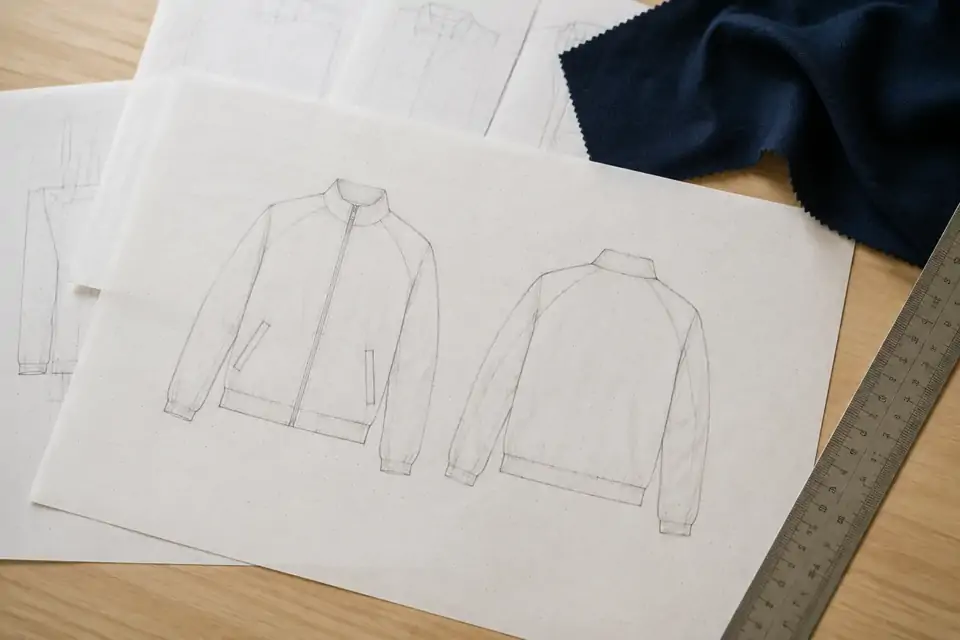
- 2. Front, back and construction drawings
- 3. Base-size measurement table
- 4. Grading rules across sizes
- 5. Measurement method and tolerances
- 6. Shell, rib, lining and pocket materials
- 7. Stitch and seam construction
- 8. Trims and hardware
- 9. Artwork process, size, color and placement
- 10. Main, size and care labels
- 11. Folding, packaging and carton requirements
- 12. Approval comments and final sample status
Measurement tolerance: the overlooked section
Tolerance defines acceptable variation around the target. A neckline, body length and waistband do not necessarily need the same tolerance. Define how the garment is laid, where the tape starts and whether the measurement is relaxed or stretched.
Version-control rule
Put the revision number and date on every page. Keep a change log. When a sample is approved, record the matching tech-pack revision and artwork files. A newer email attachment should never silently override a sealed standard.
What is enough for an enquiry, a sample and bulk?
A reference image is valuable because it communicates intent quickly. It cannot reveal the inside construction, exact fabric composition, grading or the tolerance around a measurement. If you do not know a detail, label it as open and assign someone to resolve it. An explicit question is better than a number copied from an unrelated garment.
| Stage | A useful starting package | What is not yet approved |
|---|---|---|
| Enquiry | Reference, wearer, quantity, material direction and destination | Final cost, pattern and construction |
| Sample development | Measurements, drawings, material proposal and artwork | Bulk execution before sample review |
| Bulk approval | Agreed sample, final specification and revision history | Any later unapproved substitution |
Turn vague comments into measurable changes
“Make it more oversized” can change the shoulder, chest, sleeve and body in different ways. State the sample code, size, point of measurement, current value and requested value. Add a marked photograph if the location is difficult to explain, but keep the measured change in the written record.
A tolerance is the agreed permissible variation around a target, not an invitation to choose any measurement in a broad range. Define whether the garment is laid flat, fastened, relaxed or stretched. Set tolerances by measurement point and intended function rather than copying one allowance across the garment.
| Unclear comment | More useful instruction |
|---|---|
| The sleeves are too short | Identify sample size, sleeve measuring points and requested finished length |
| Move the logo up | State distance from a named seam to a specified artwork edge |
| Make the waist tighter | Separate relaxed opening, stretched opening and elastic behaviour |
Do not leave labels until the end
For many US textile and wool products, FTC guidance requires fiber content, origin and the identity of the responsible business. Care information is covered separately. These are US references, not a complete checklist for every market or product.
Reserve label locations in the specification and identify who supplies and approves the text. Do not print a composition percentage, origin statement or care instruction merely because it appears on a reference garment. Confirm the actual product and destination requirements before releasing artwork.
What connects the document to quality control?
SGS describes final inspection as checking against a reference sample, confirmed specifications, purchase-order requirements and packing instructions. This supports a simple distinction: a document describes the standard; an inspection checks selected goods against the agreed scope. Neither is proof of perfection.
Keep the approval sample identifier, material references, artwork files and measurement sheet together. If a construction change is accepted during development, update the relevant page and the change log. A later message should not silently replace the approved production record.
A compact file-handover routine
This routine does not require a particular software package. The objective is that a buyer, developer and production contact can identify the same garment and the same approved decisions without reconstructing a long chat history.
- Name the style and revision consistently across all files.
- List the current drawings, measurement sheet, artwork and material references.
- Show the requested change and whether it is open, rejected or approved.
- Confirm that the factory has the same final revision before bulk release.
- Agree access and ownership of patterns and editable files in writing.
Put this guide to work
Turn a reference image into a reviewable brief
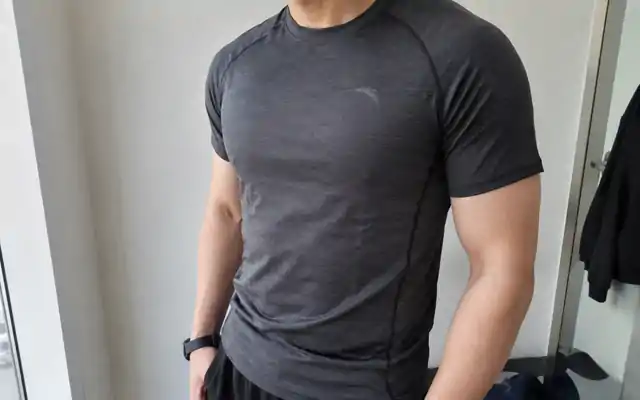
For a performance polo, a photograph alone leaves the collar, placket length, button spacing and sleeve opening unresolved. Add front and back views, a measurement table, fabric direction and artwork dimensions. Mark unknown decisions explicitly. When the first sample arrives, record each requested change against the same document revision instead of sending disconnected messages. Approval should point to one agreed sample and its matching files.
Your decision checklist
- Assign a style code and revision date to the brief.
- Show where and how each measurement is taken.
- Keep artwork, trims and sample comments with the approved revision.
These are planning examples, not customer case studies or quotations.
Frequently asked questions
Can a reference sample replace a tech pack?
It can communicate handfeel and proportion, but it does not define grading, tolerance, artwork files, labels or ownership. Translate it into an agreed specification.
Who should create the tech pack?
A designer or technical developer can create it; some ODM factories can help complete it. The buyer should still review and approve every production decision.
Do I need DXF pattern files?
Not always. Ask whether the supplier works from its own patterns, buyer patterns or both, and clarify file compatibility and ownership.
Sources and evidence notes
Community sources document recurring buyer questions and experience; they are not treated as universal technical standards. Official guidance is identified separately.
- Community discussionReddit: founder lessons and the discussion about tech packs
- Inspection provider: service scopeSGS: final random inspection against agreed specifications
- Official US guidanceFTC: US textile and wool labeling requirements
- Official US guidanceFTC: apparel labels and care instructions